Vintage 1940's Dress - Buttermilk White Silk Crepe with Open Back | S
Couldn't load pickup availability
This vintage 1930s to early 1940s dress was made from a natural silk crepe material in a decadent shade of buttermilk. Bias cut with beautiful eyelet detail at the center chest which adds a subtle yet very special bit of decor to the bodice. Short ruched sleeves adorned with silk satin ribbon bows which contribute to the sweetness of the gown. Very flattering with ruched panels under the bust and a sleek waist panel that accentuates the figure without constriction. What makes this gown so very special is the very sexy deep slit at the center back framed in silk satin, closing at the neck with ribbon bows and directly above the derriere with fabric covered buttons. Midi length with a fluted hem. This dress is truly what dreams are made of!
Quick Facts
Label: None, likely made special for someone
Era: 1930s-1940s
Material: Silk crepe, silk satin
Color: Buttermilk (a rich creme shade of white)
Size: Small, medium (please see measurements)
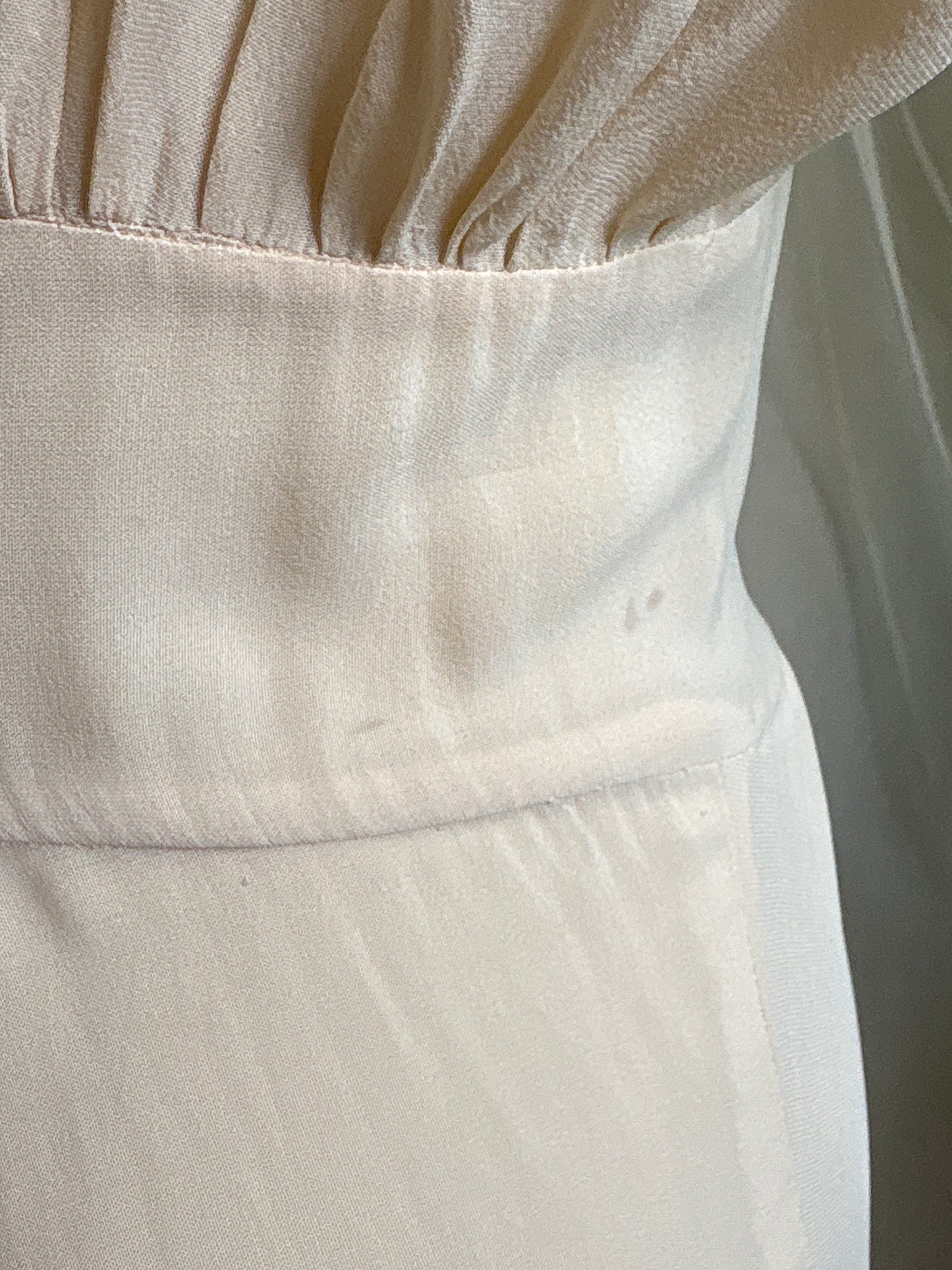
Condition: Hand washed and steamed with no holes or rips. One very, very faint bit of foxing in the eyelet detail and two inconspicuous grayish marks on the right side of the waist. Hem may have been shortened at some point but I cannot confirm as the stitching is consistent around the entire dress; mentioned 'just in case'.
Measurements:
• Taken seam to seam laying flat, relaxed, then doubled
• Maximum stretch given for comfort without applying stress to seams
Shoulders: 16.5"
Sleeve Length: 8"
Armscye: 15"
Sleeve Opening: 10"
Bust: 34-36”
Waist: 27-28"
Hips: up to 42"
Length: 16" shoulder to mid-waist panel
Length: 47” from shoulder to hem
Share
A Note on Buying Vintage
This is an antique or early vintage garment made from delicate materials such as silk, fine cotton, lace, or early synthetics. These textiles may display signs consistent with age, which includes:
• natural fiber fatigue
• gentle thinning at stress points
• subtle irregularities inherent to early manufacturing
• age-related softness or patina
These qualities are authentic to historic garments and are considered part of their character, not defects, unless otherwise stated.
Notable flaws, such as excessive wear, stains, holes, or rips will always be photographed and disclosed in the condition notes.