Vintage 1920's - 1930's Tap Pants - Ivory Crepe-Back Silk Satin with Deep Nude Lace | XS
Couldn't load pickup availability
These late 1920s to very early 1930s tap pants have never been worn, made from a creamy ivory crepe-back silk satin material with a very high pearlescent luster and decadent heavier weight. Bias cut with a flattering V cut waist panel that comes to a point both in the center front and back. A wide fluttery hip allows for movement while giving a cheeky glimpse of skin. The little panties feature gorgeous deep nude cotton lace framed with thick embroidery that traces each leg opening, with button closure at the right side of the waist for closure. A very well designed pair of tap panties.
Quick Facts
Label: None
Era: 1920s-1930s
Material: Silk satin, cotton lace
Color: Ivory, warm nude
Size: XS (please see measurements)
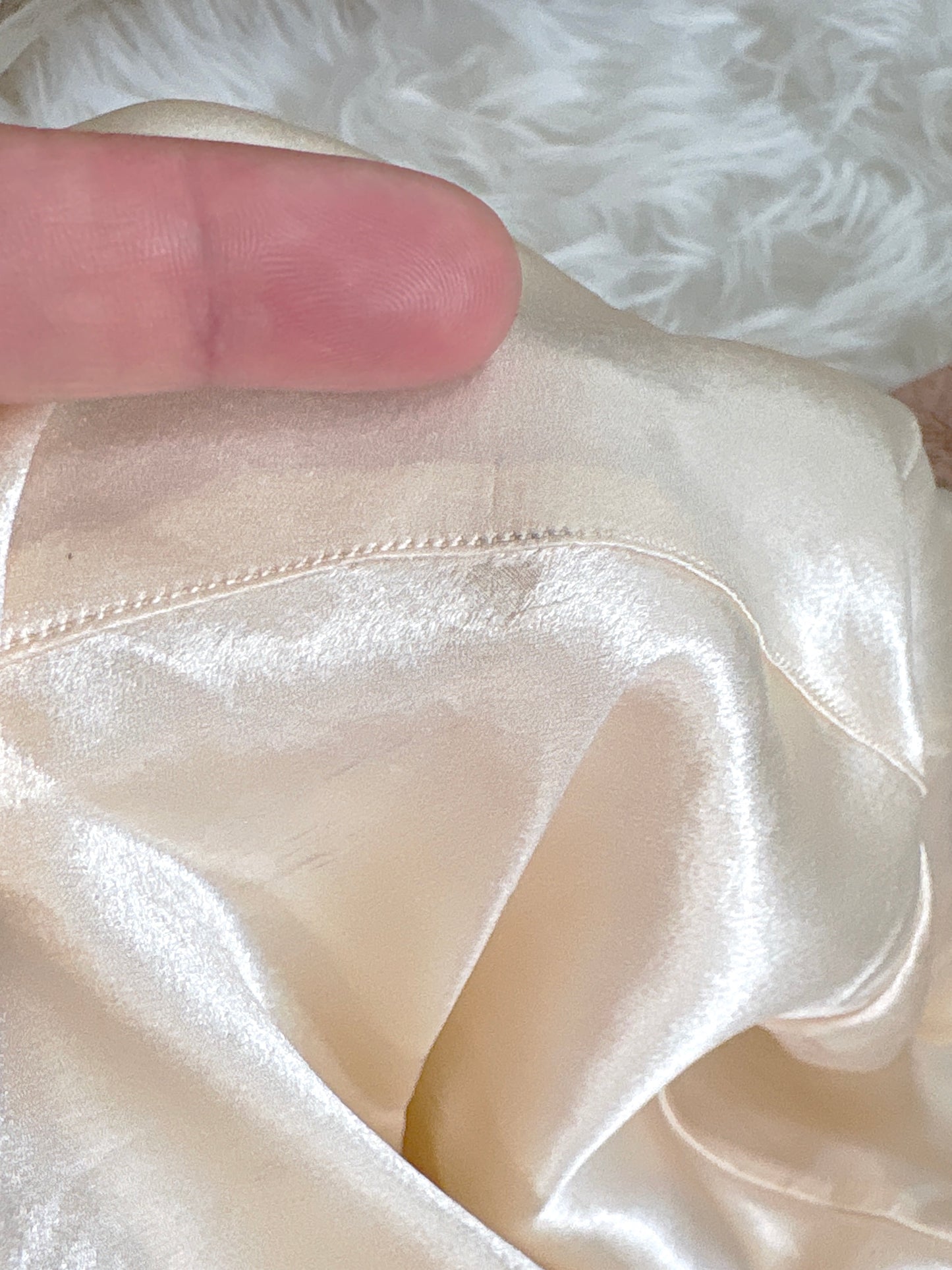
Condition: Deadstock, but I have washed and pressed these. Some fold marks that did not relax when pressed (antique silk crepe can be a bit stubborn and I didn't want to risk burning them) and one very small patched bit of fray secured with fusing fabric. Strong and sturdy for wear thanks to the heavier weight.
Measurements:
• Taken seam to seam laying flat, relaxed, then doubled
• Maximum stretch given for comfort without applying stress to seams
Waist: 27"
Hips: up to 42"
Length: 15” sides
Length: 17" waist to center gusset
Share
A Note on Buying Vintage
This is an antique or early vintage garment made from delicate materials such as silk, fine cotton, lace, or early synthetics. These textiles may display signs consistent with age, which includes:
• natural fiber fatigue
• gentle thinning at stress points
• subtle irregularities inherent to early manufacturing
• age-related softness or patina
These qualities are authentic to historic garments and are considered part of their character, not defects, unless otherwise stated.
Notable flaws, such as excessive wear, stains, holes, or rips will always be photographed and disclosed in the condition notes.