

Antique 1910's Edwardian Negligee Nightgown | Ivory Tissue Silk with Ruffled Embroidered Tulle Lace | Size S, M
Antique 1910's Edwardian Negligee Nightgown | Ivory Tissue Silk with Ruffled Embroidered Tulle Lace | Size S, M
Couldn't load pickup availability
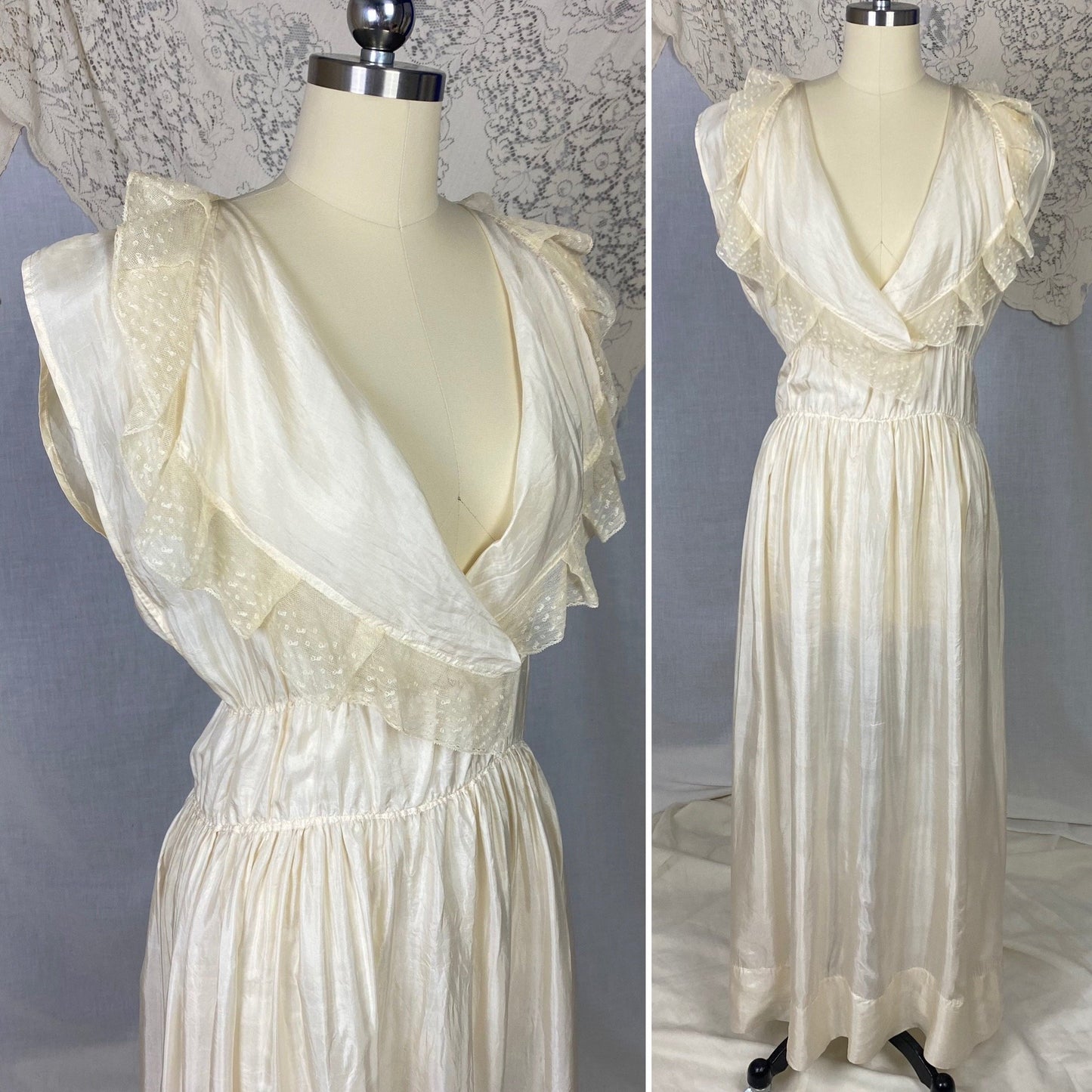
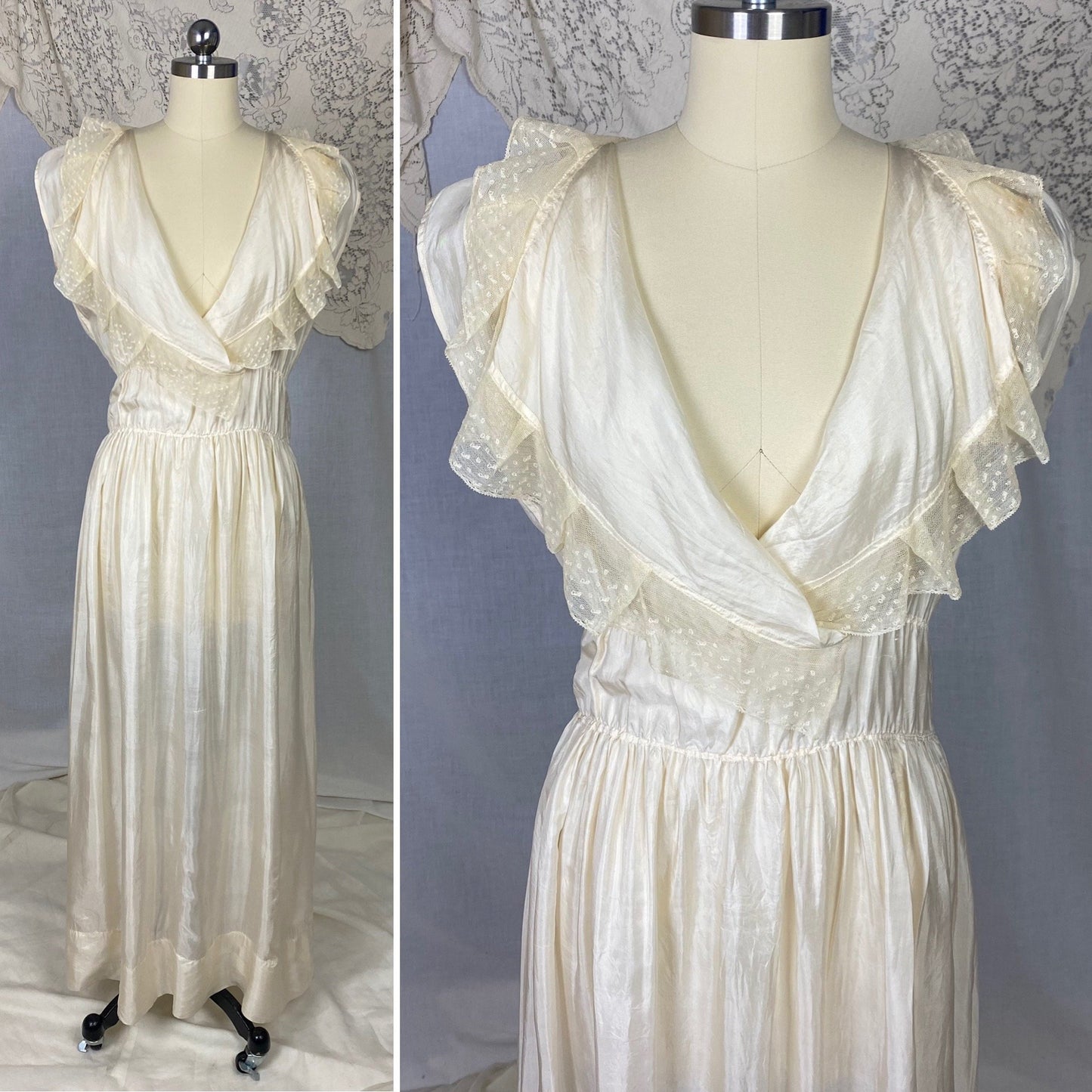
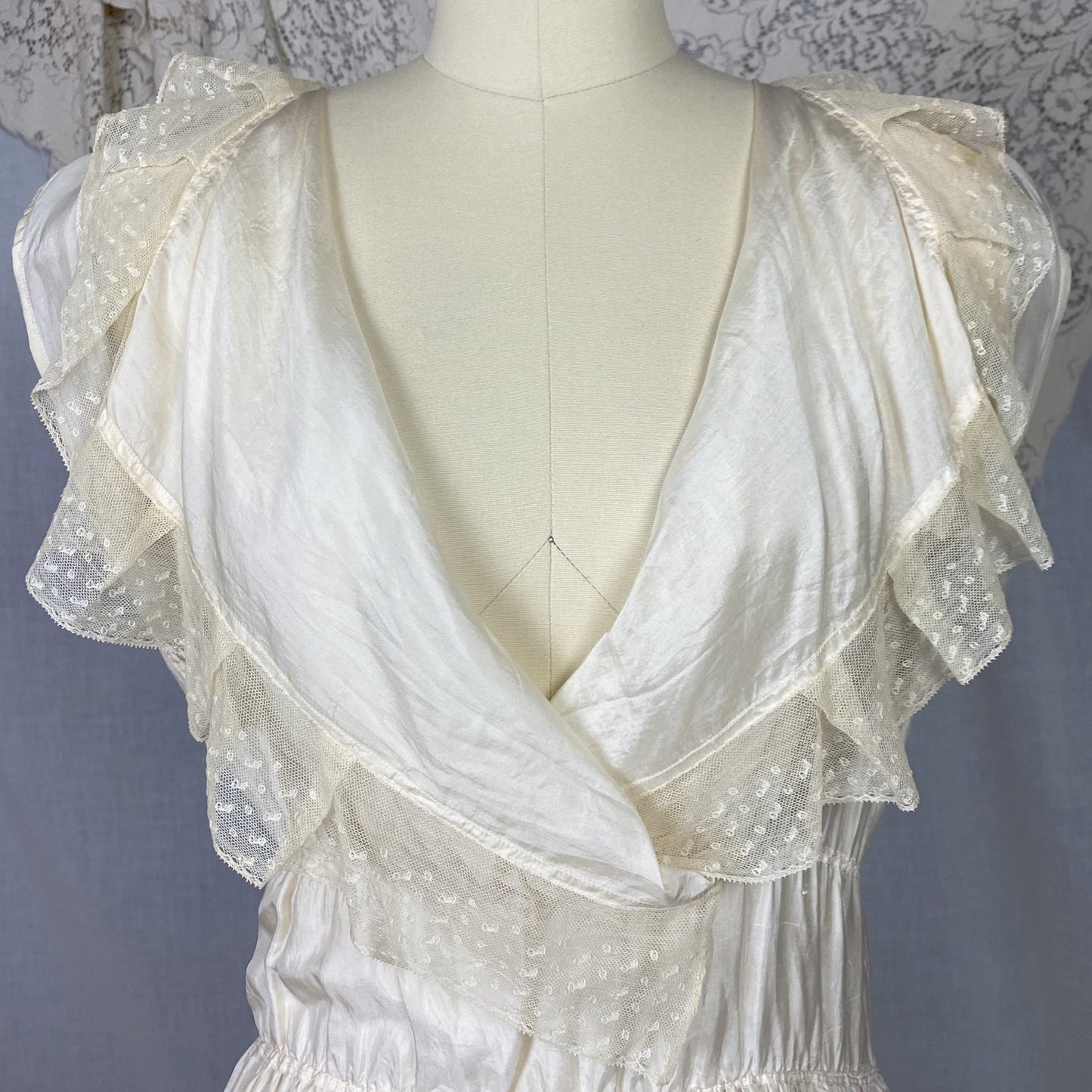
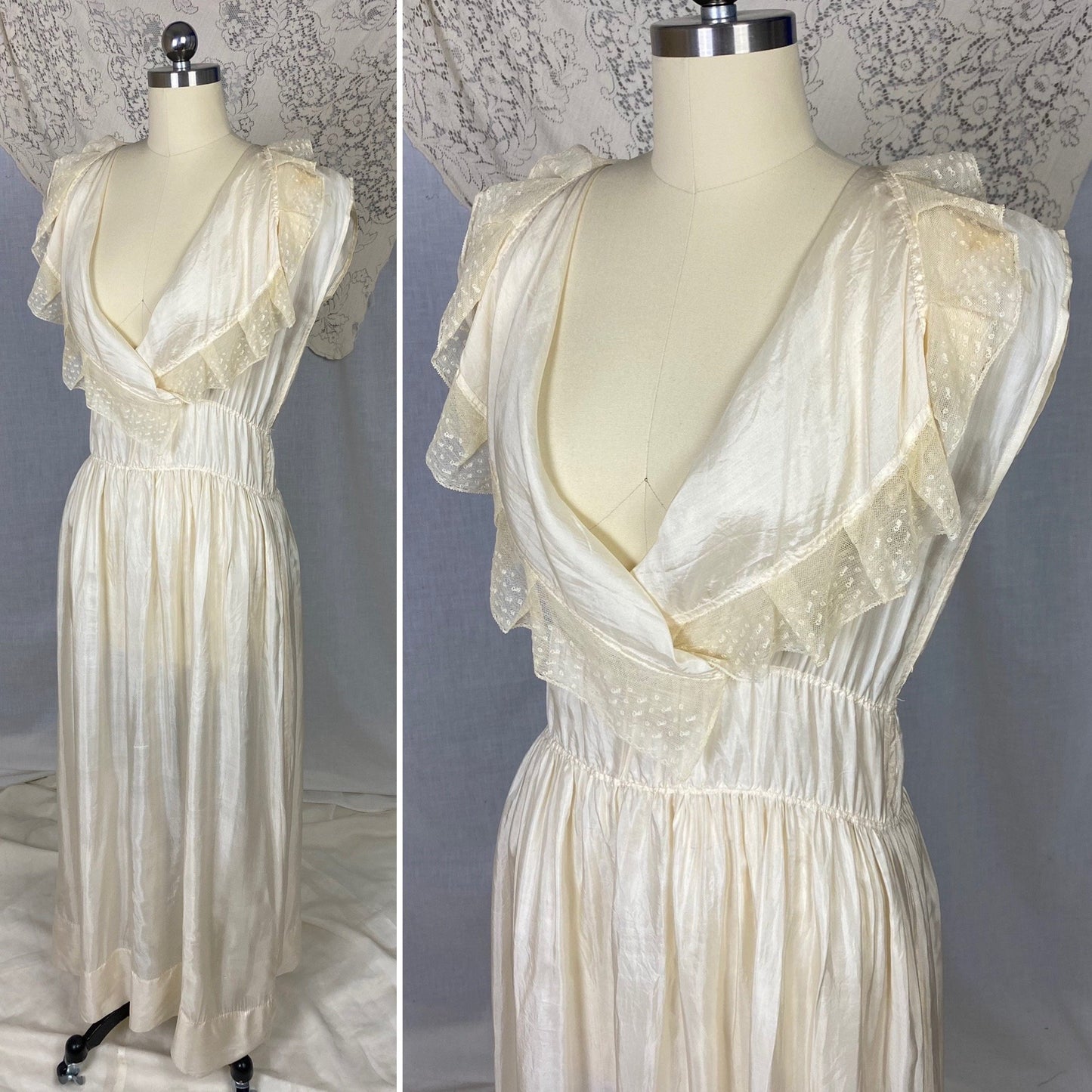
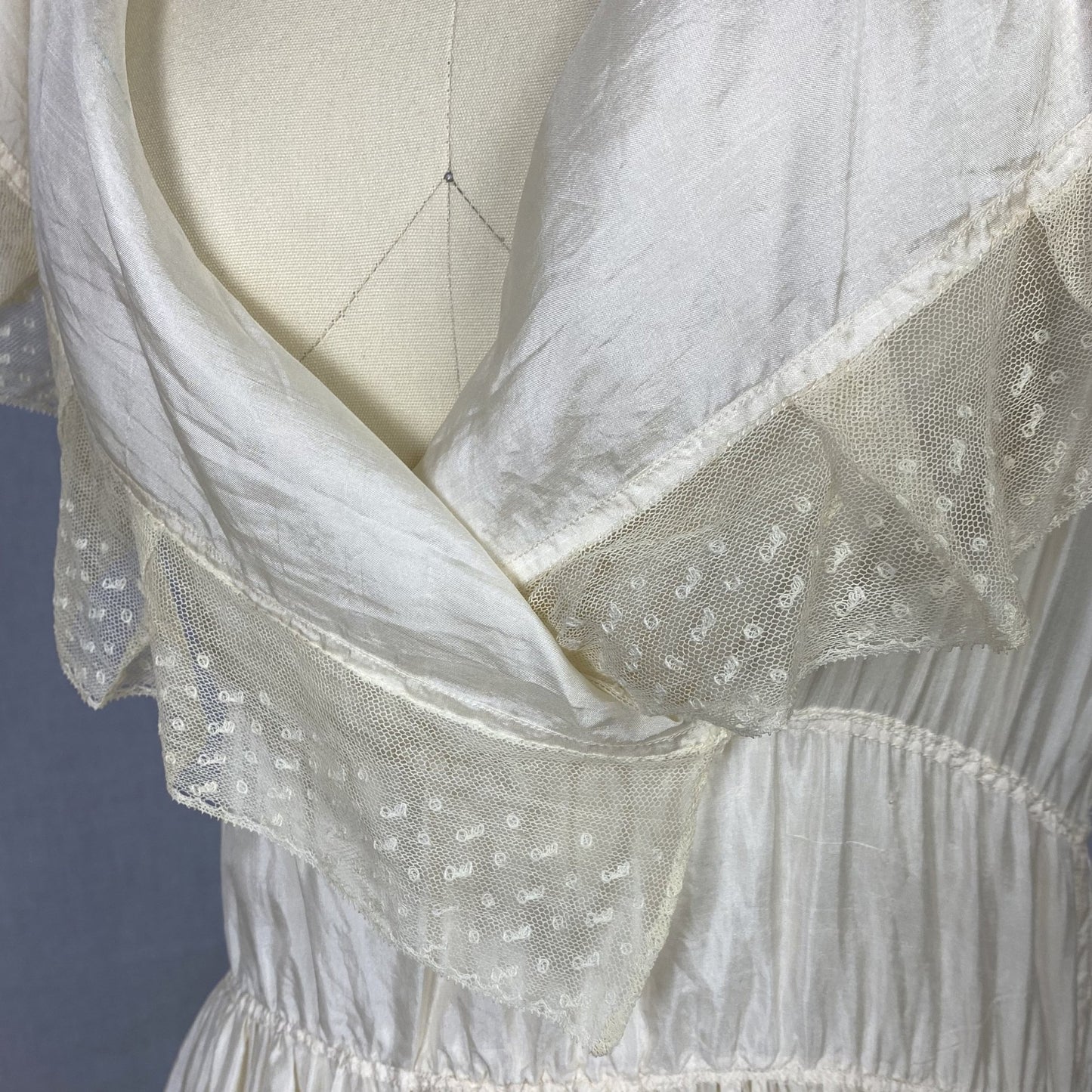
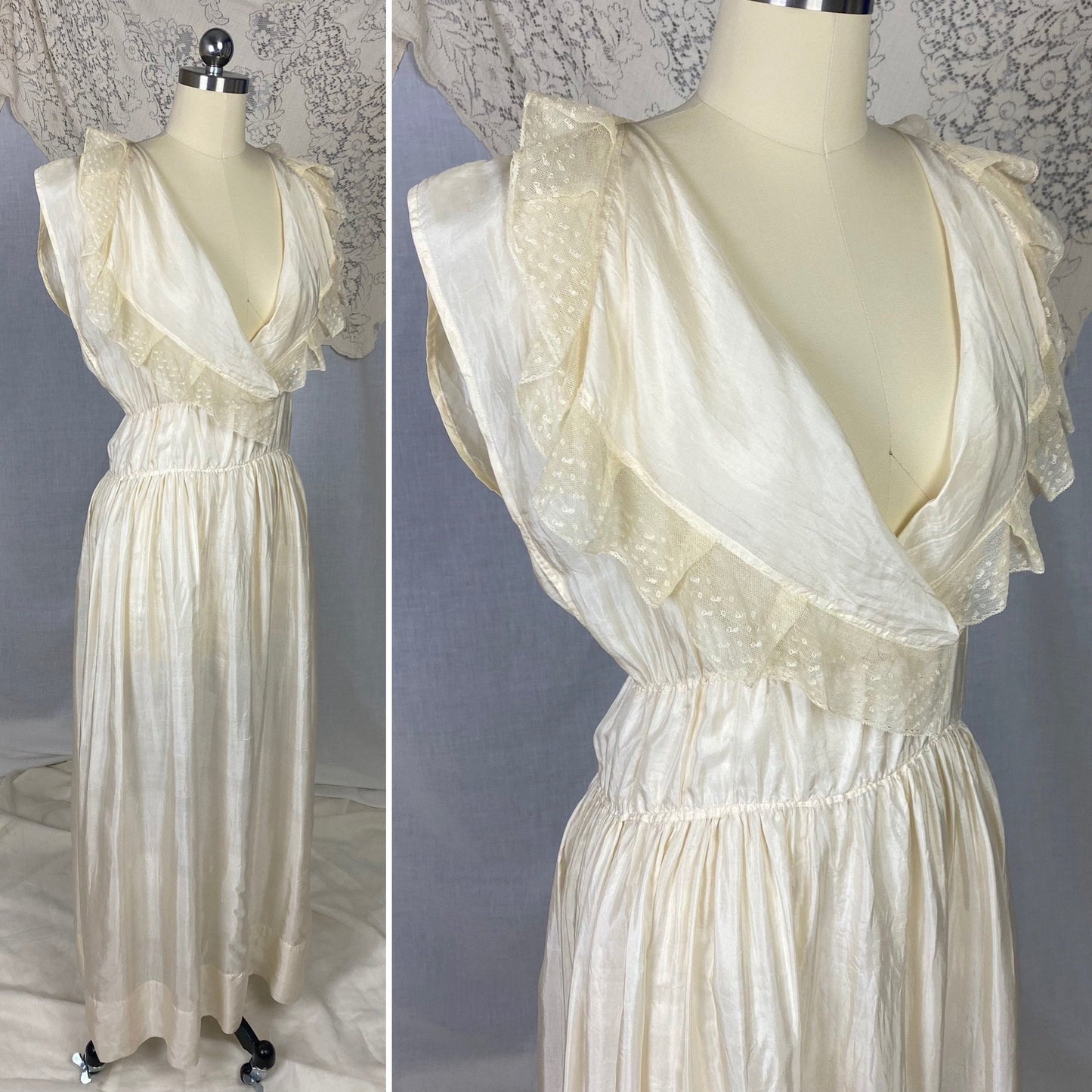
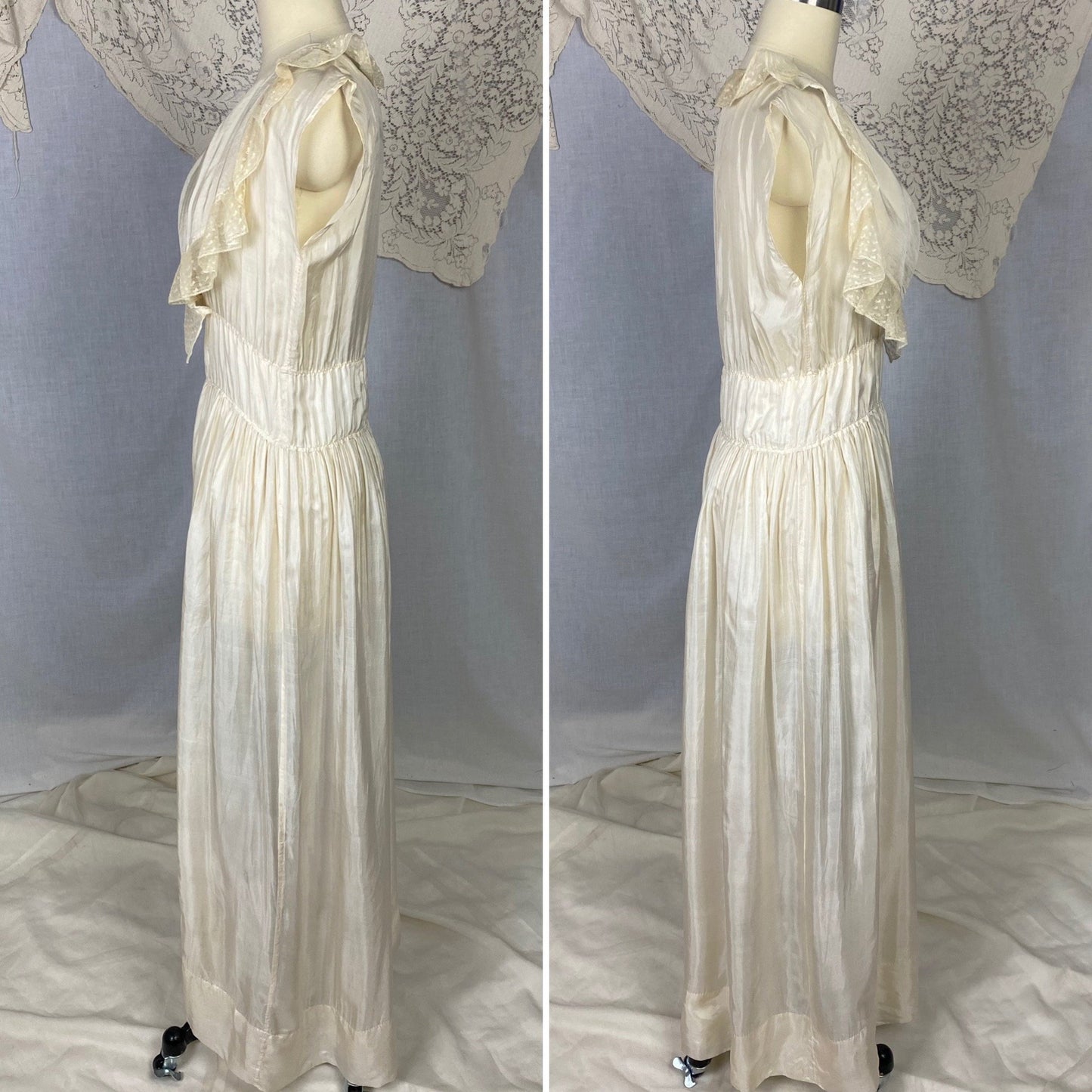
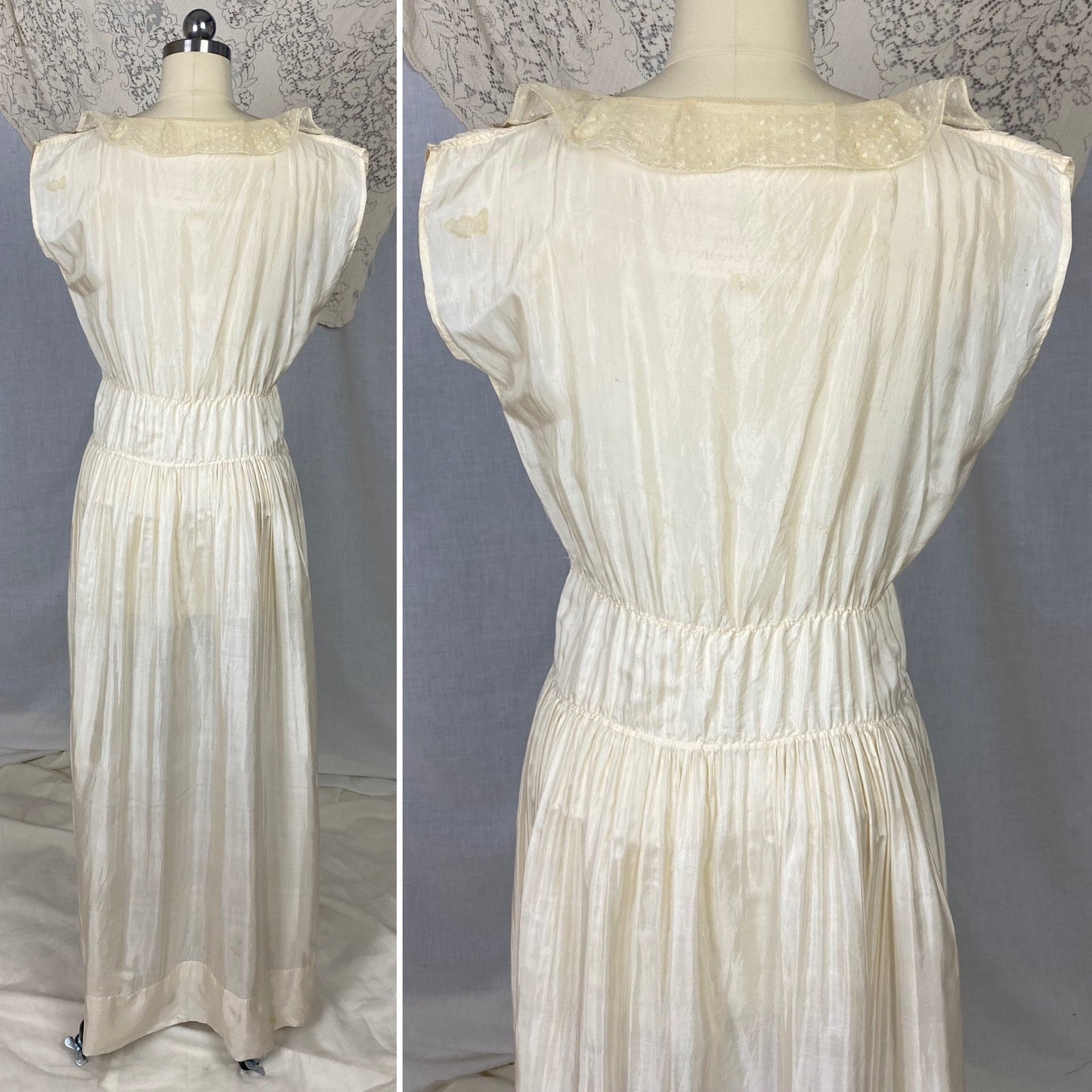
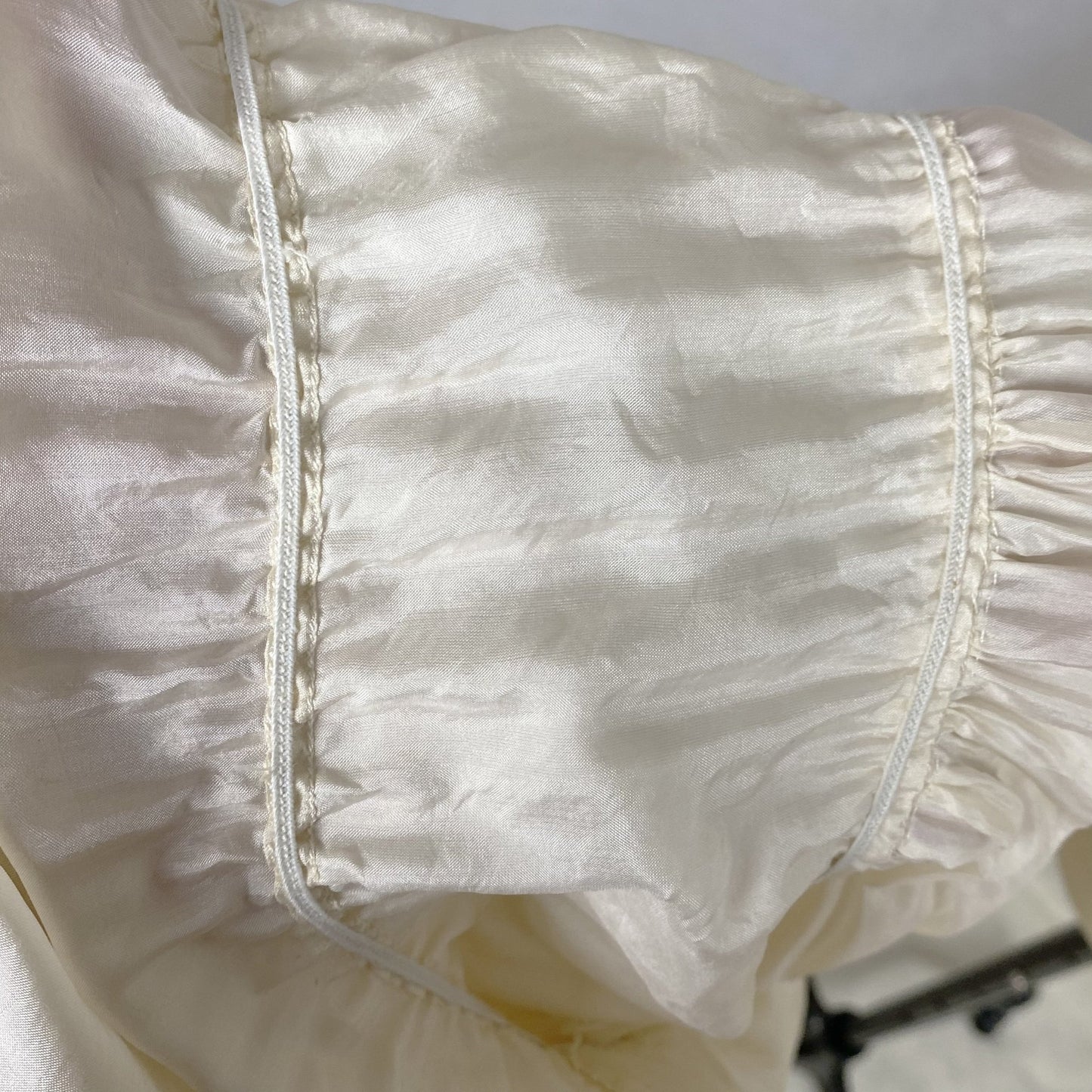
Antique 1910s Edwardian to early 1920s negligee nightgown made of a very pale semi-sheer ivory tissue silk. An open V cut neckline and bountiful lace ruffled collar. This gown is fitted at the waist with sewn-in elastic bands for an adjustable fit while accentuating the curves. A long, wide skirt falls to the ankle giving a heavenly sway and highlighted folds. Truly a special piece of lingerie.
*** ***
CONDITION :
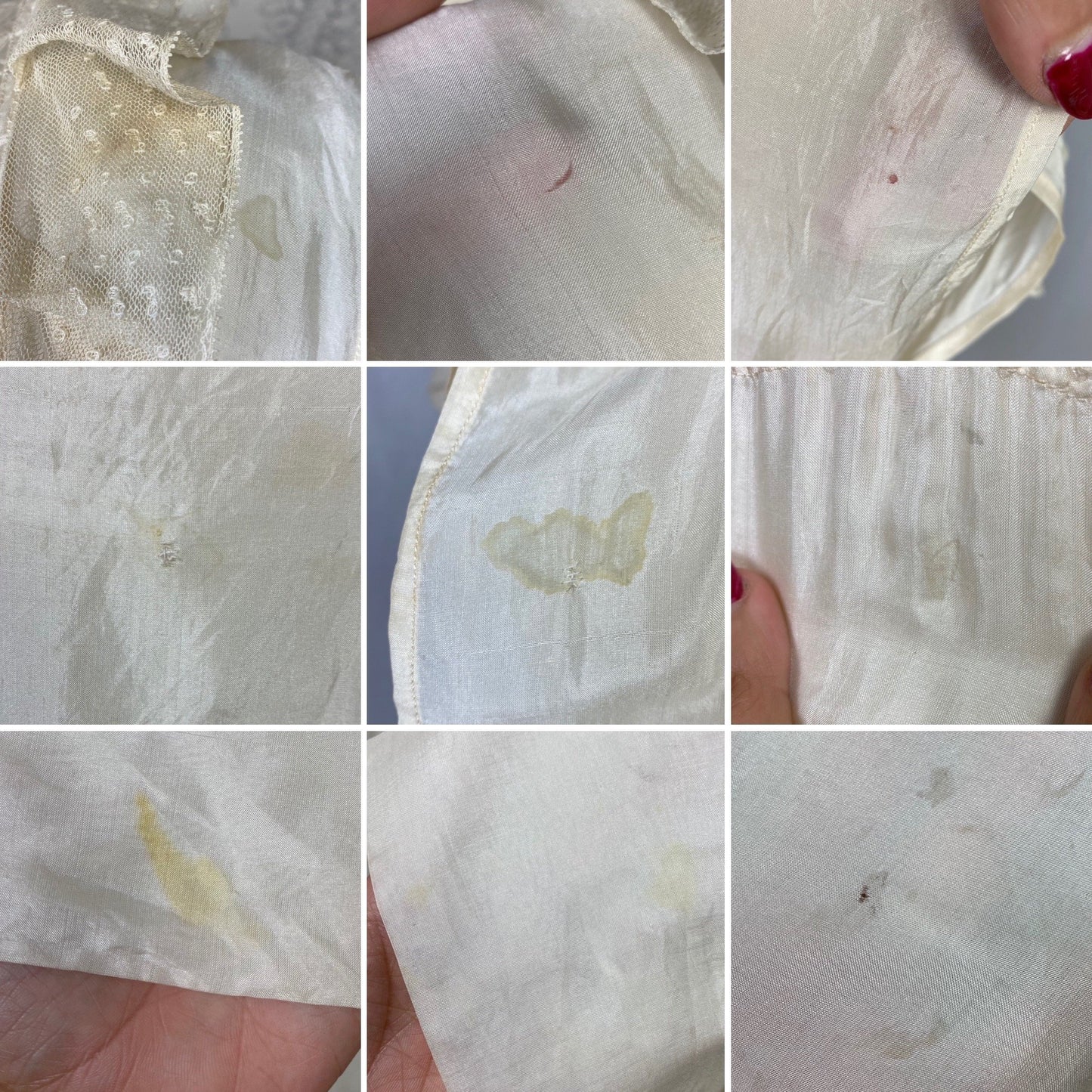
Excellent: Hand washed and steamed, structurally sound, and able to be worn. There are a few tiny holes and a couple of obvious mends as pictured. Some spots from storage and age.
NOTE:
Elastic was first invented in 1820 and then made to use for clothing in the year 1900. It was still a rare thing to see until decades later. The elastic in this gown is still stretchy and is a thin cotton, but I can't confirm whether it is or is not original. Photo of elastic is included for reference.
*** ***
BRAND/LABEL - No Label
COLOR - Ivory white
MATERIAL - Silk, lace
SIZE - S/M
MEASUREMENTS:
- Taken while laying flat, relaxed, then doubled.
- Maximum stretch given for comfort, not capacity.
- Bust is basically open; max given for coverage.
- Shown unpinned on a size 4 dress form.
BUST - 34-38"
WAIST - 30-34"
HIP - 68"
LENGTH - 58"
*** ***
See the FAQs for more information pertaining to the following:
- Returns & Cancellations
- Sizing Details
- How I Process your Orders
- How I care for the items I sell
- Vintage Shopping
- Shipping & Insurance
Share
A Note on Buying Vintage
A Note on Buying Vintage
This is an antique or early vintage garment made from delicate materials such as silk, fine cotton, lace, or early synthetics. These textiles may display signs consistent with age, which includes:
• natural fiber fatigue
• gentle thinning at stress points
• subtle irregularities inherent to early manufacturing
• age-related softness or patina
These qualities are authentic to historic garments and are considered part of their character, not defects, unless otherwise stated.
Notable flaws, such as excessive wear, stains, holes, or rips will always be photographed and disclosed in the condition notes.