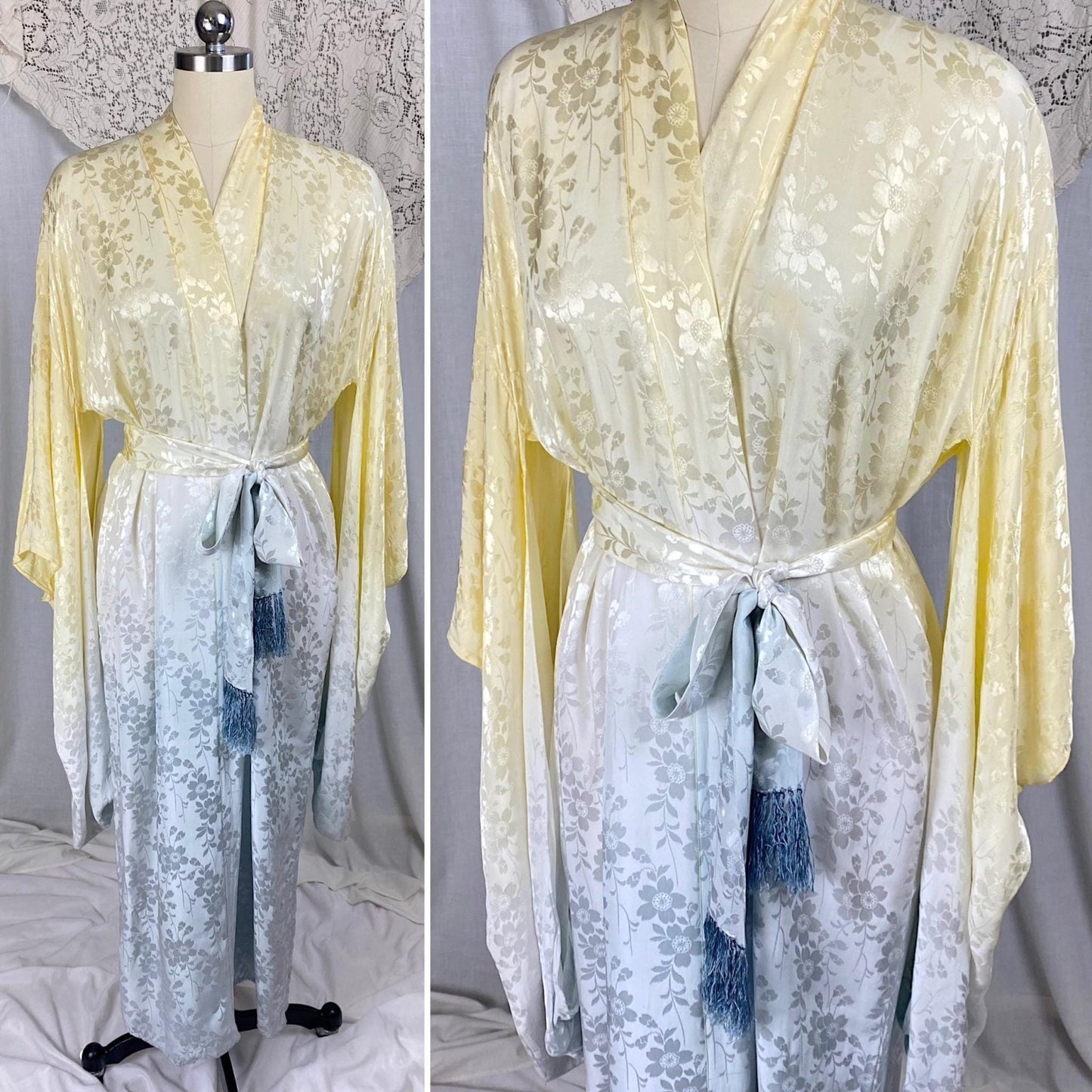


Vintage 1940's - 1950's Japanese Kimono Robe | Lemon Yellow & Gray Ombre Rayon Satin Damask with Fringe Sash tie | Mitsuba Aoi Crest
Vintage 1940's - 1950's Japanese Kimono Robe | Lemon Yellow & Gray Ombre Rayon Satin Damask with Fringe Sash tie | Mitsuba Aoi Crest
Couldn't load pickup availability
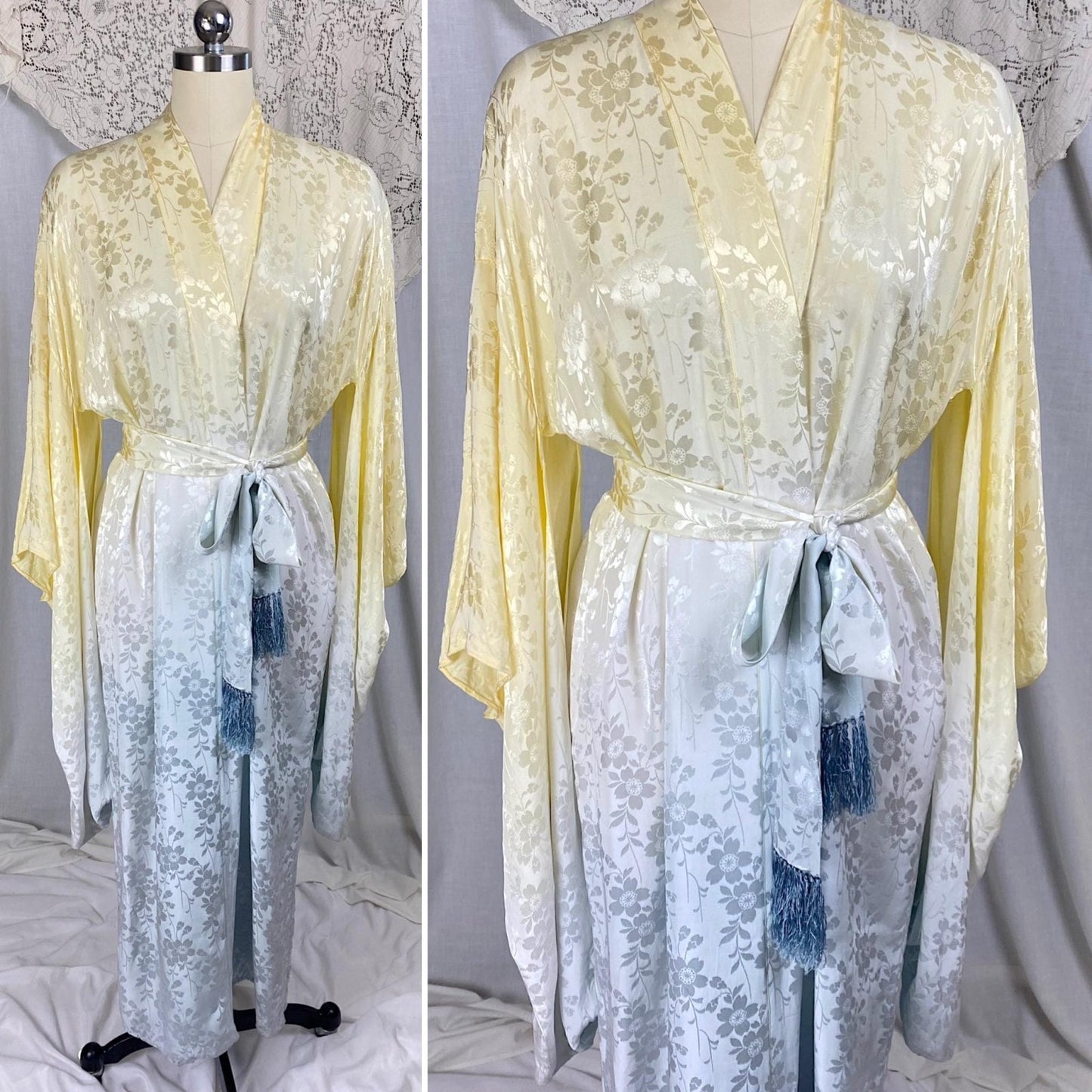
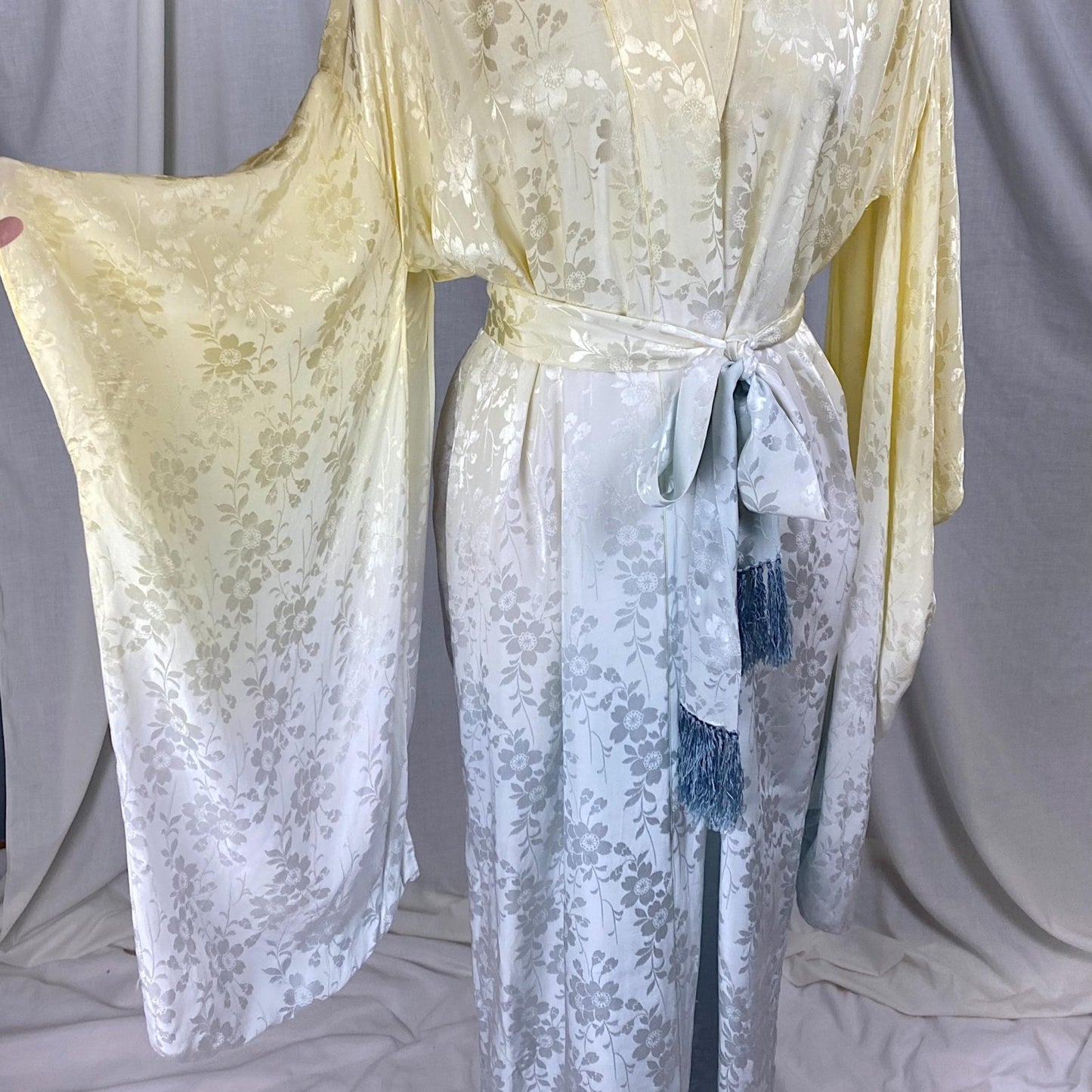
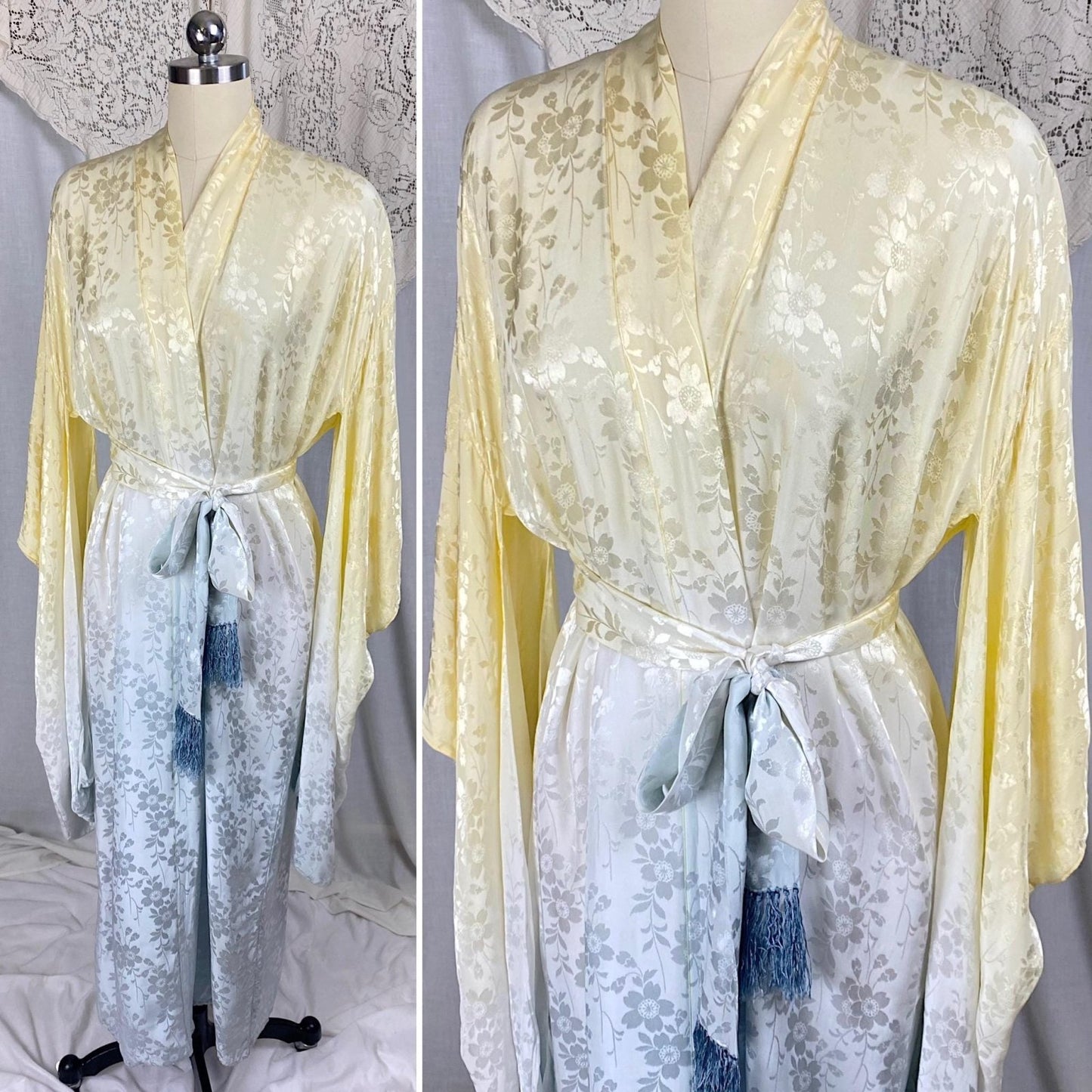
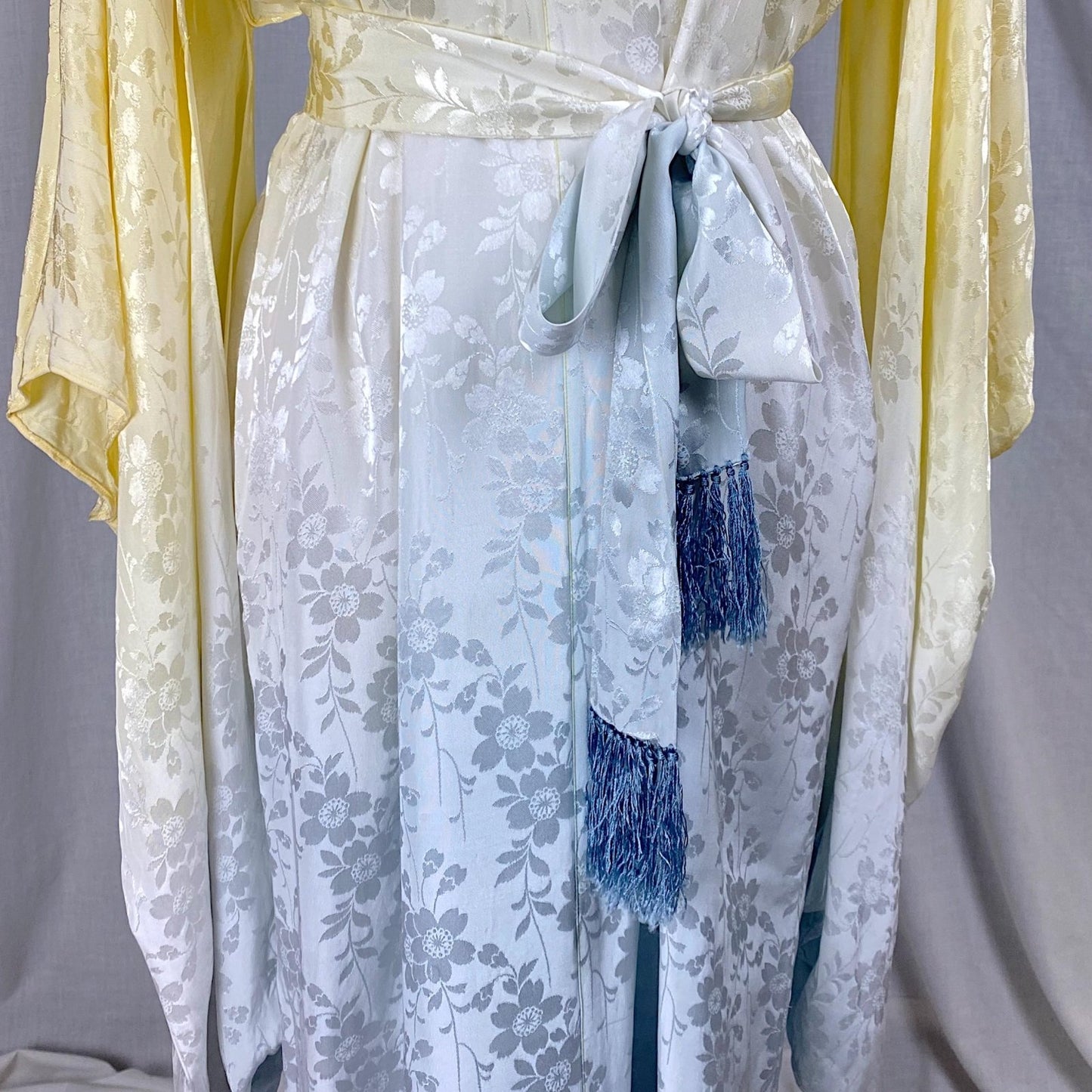
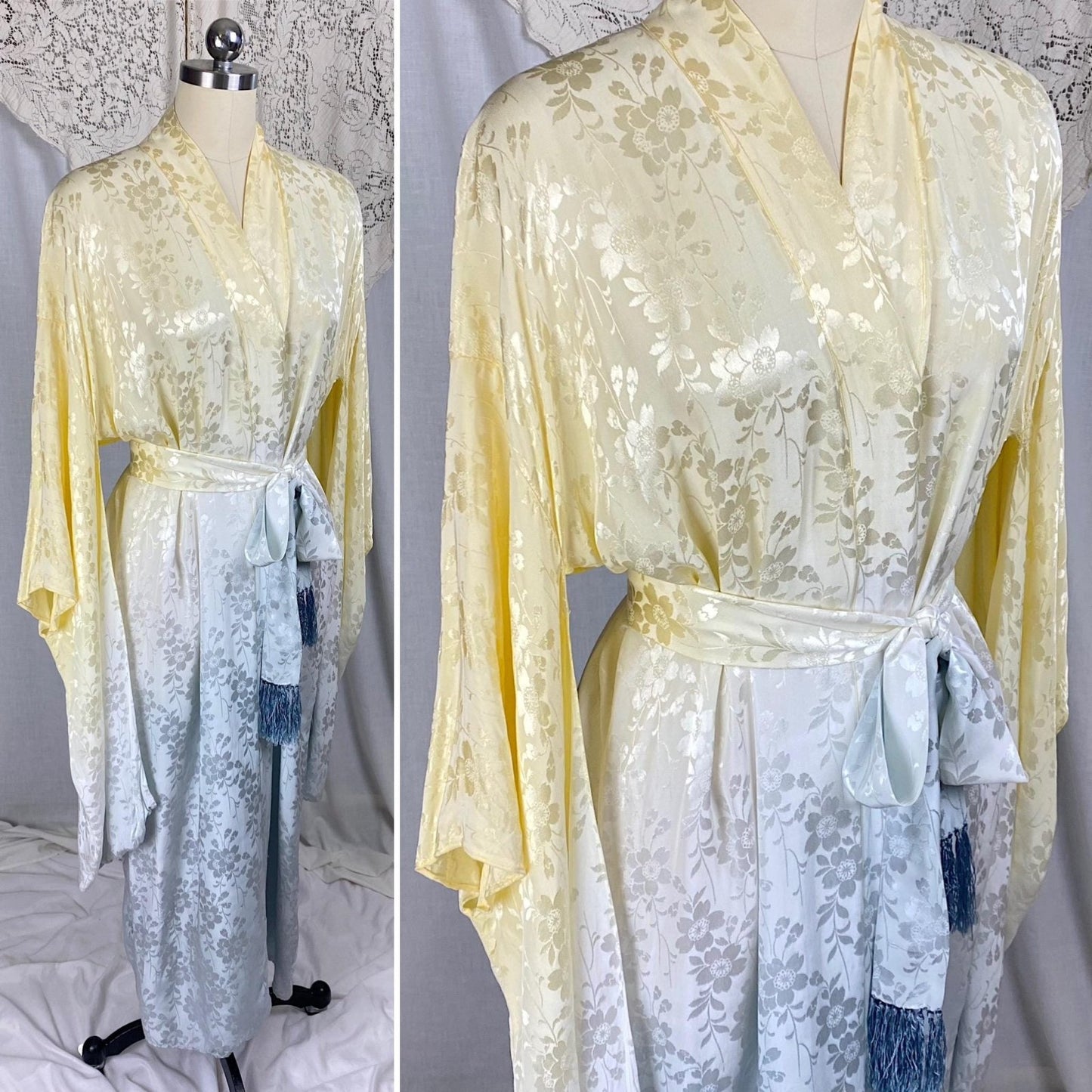
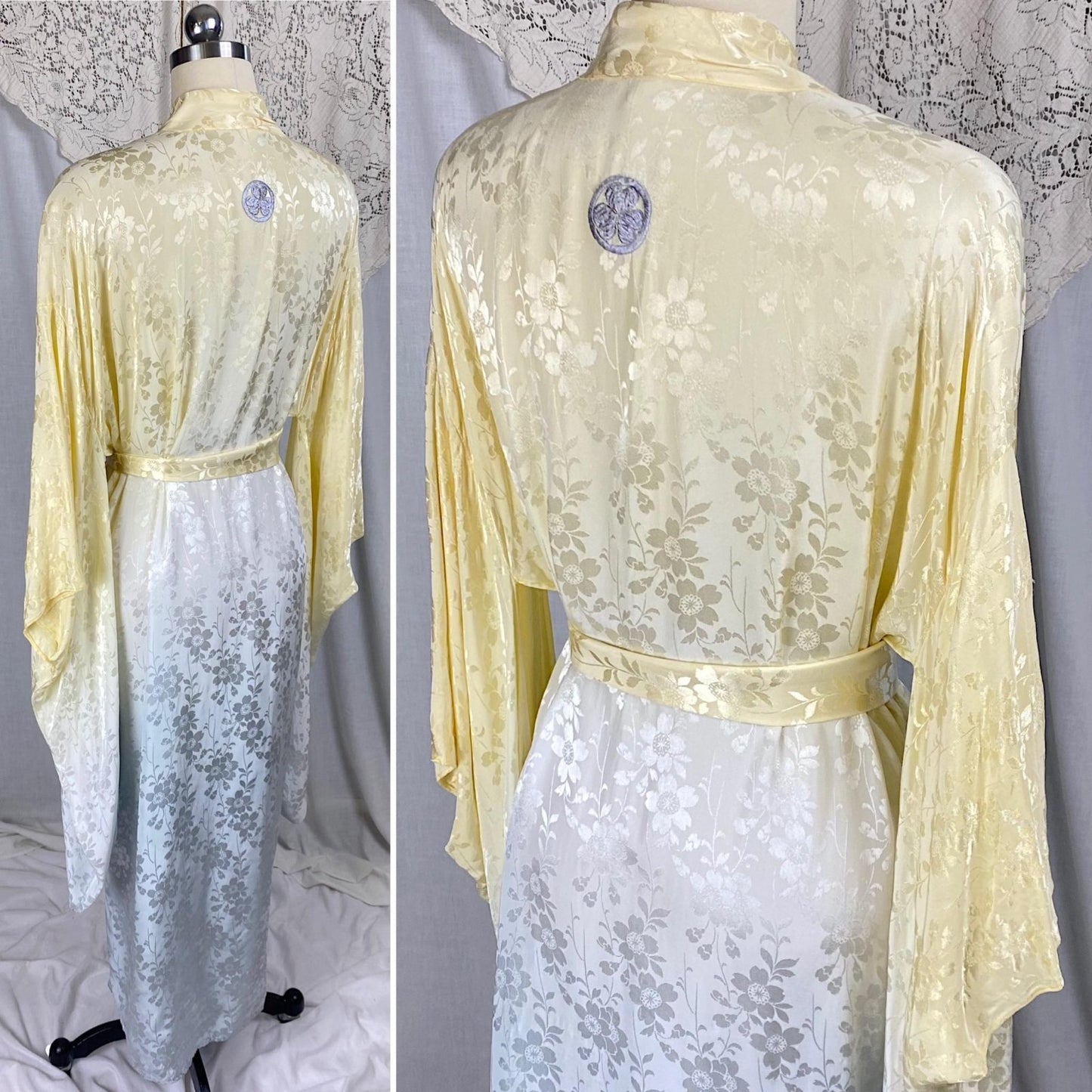
Vintage 1940s to early 1950s Japanese kimono robe made from a very silky rayon satin with floral damask pattern in a gorgeous lemon yellow, white, and gray ombre hue. This robe is mid-weight and unlined, which offers a flattering drape along the figure. Very long sleeves that nearly reach the floor adds a decadent touch. A wide open fit that closes at the waist with an accompanying fringe sash tie. A very special piece!
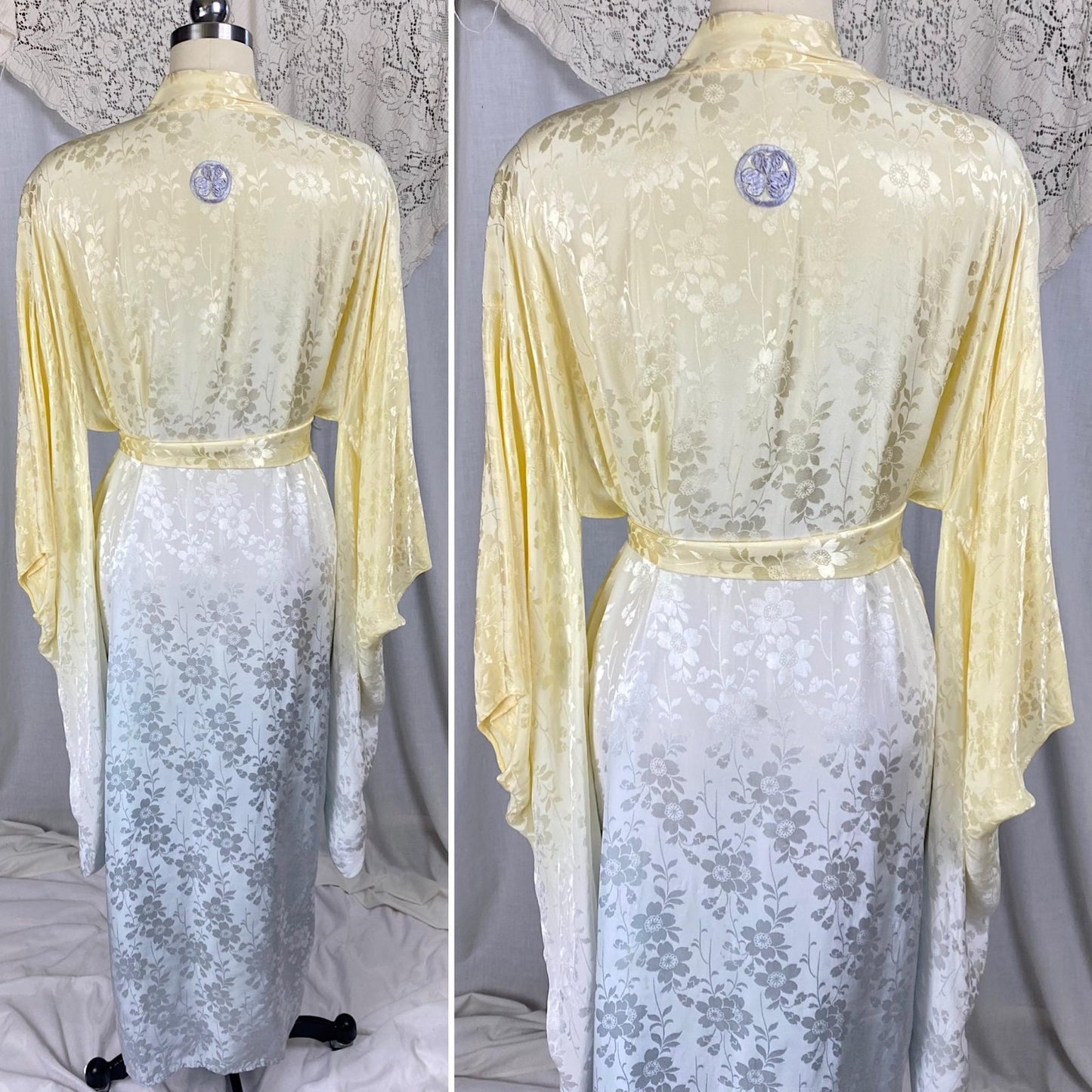
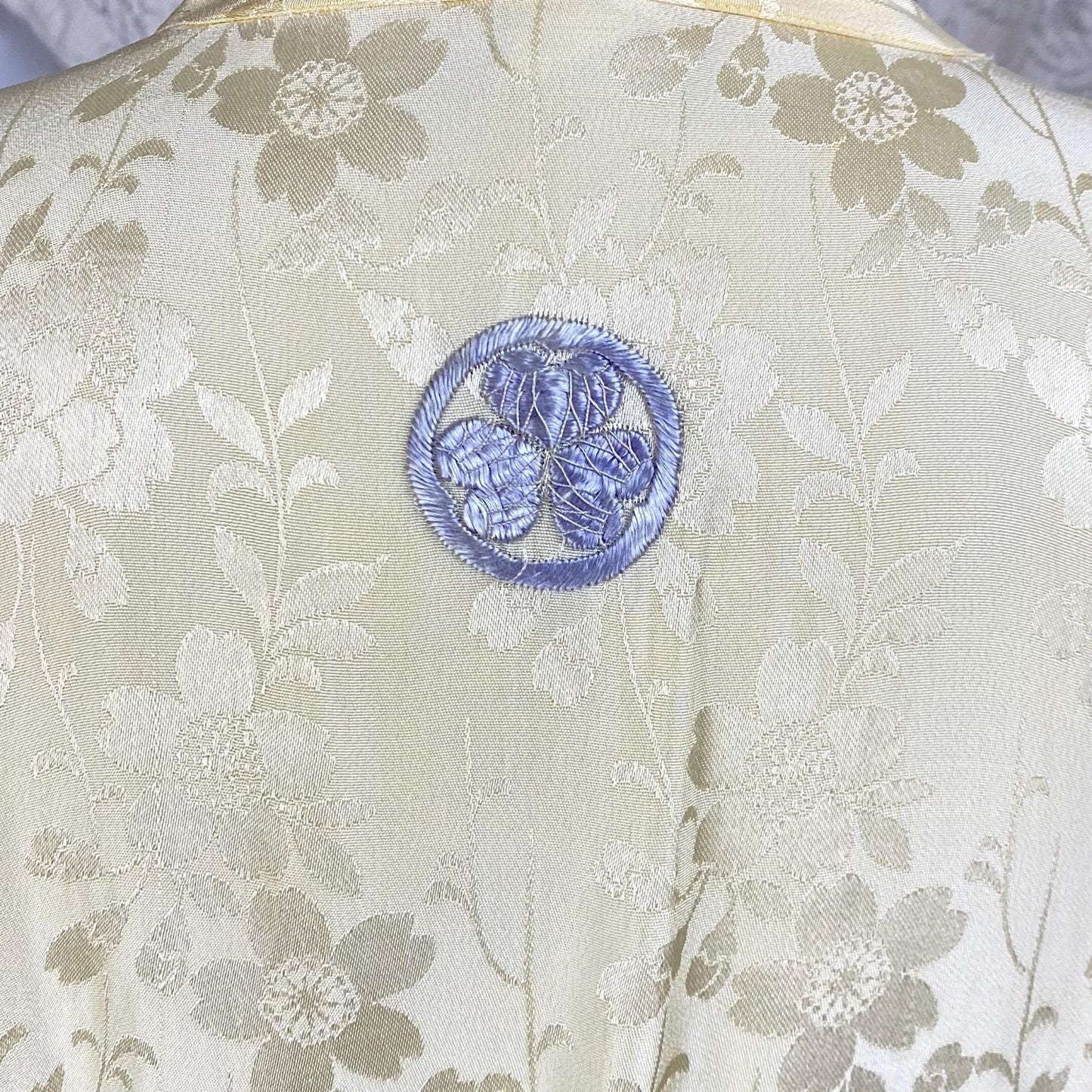
NOTE: This kimono features an embroidered Mitsuba Aoi crest at the center back that was popular during the 1920's and 1930's, but I am not entirely comfortable with dating the robe to that era. The hollyhock leaves represent purity, harmony with nature, and divine protection, while the circular arrangement signifies unity and collective strength.
*** ***
CONDITION
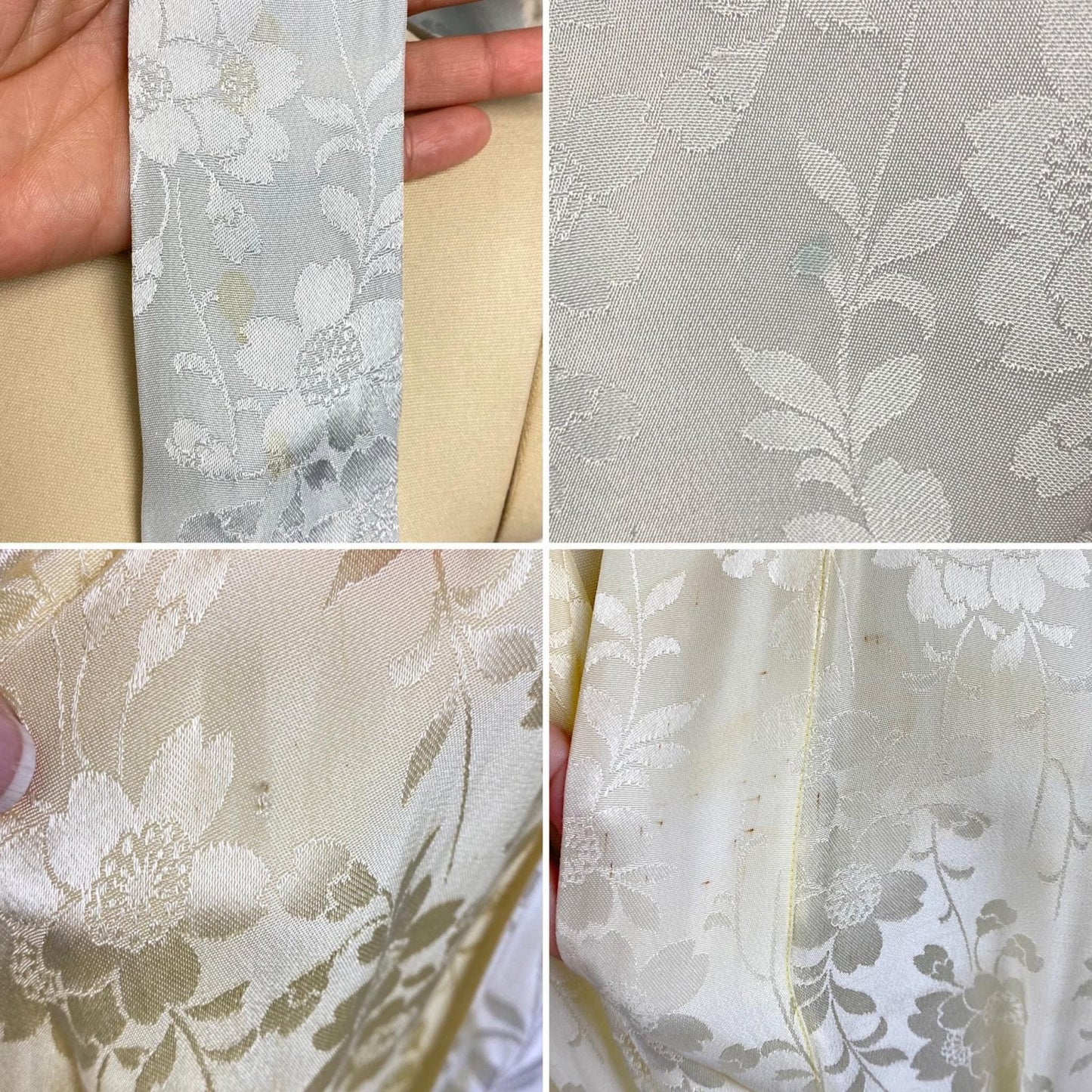
Very good: Hand washed and steamed. There is one small hole at the top of the shoulder and a cluster of thin rust marks on the right lapel. The sash has a few marks as pictured.
*** ***
BRAND/LABEL - none
COLOR - Yellow, white, gray
MATERIAL - Rayon satin damask
SIZE - free up to XL
MEASUREMENTS
- Taken seam to seam while laying flat, relaxed, then doubled.
- Seam to seam measurement provides approximately 5 inches of overlap when worn closed.
- Length taken from top of shoulder to hem.
WIDTH - 48"
LENGTH - 53"
SLEEVE LENGTH - 27"
SASH LENGTH - 78"
*** ***
Share
A Note on Buying Vintage
A Note on Buying Vintage
This is an antique or early vintage garment made from delicate materials such as silk, fine cotton, lace, or early synthetics. These textiles may display signs consistent with age, which includes:
• natural fiber fatigue
• gentle thinning at stress points
• subtle irregularities inherent to early manufacturing
• age-related softness or patina
These qualities are authentic to historic garments and are considered part of their character, not defects, unless otherwise stated.
Notable flaws, such as excessive wear, stains, holes, or rips will always be photographed and disclosed in the condition notes.